
Rebuilding Focus from the Inside Out
In today’s fast-paced world, attention is a precious resource—shaped not only by personal habits but by stress, economic instability, and identity challenges. Chronic distraction, low self-esteem, and imposter syndrome often emerge from these pressures, creating cycles that hinder personal growth. Emerging wellness practices, such as mindful routines and exploratory approaches like microdosing, offer potential ways to enhance focus and self-awareness—always within legal and ethical boundaries. At the heart of transformation lies the ancient principle of know thyself: cultivating self-knowledge allows individuals to direct attention intentionally, strengthen confidence, and reclaim agency over their lives. Mushroom cultivation exemplifies this process, offering a practice that combines patience, observation, and consistency, reinforcing both attentional discipline and personal empowerment. By integrating intentional practices into daily life, readers can cultivate resilience, self-trust, and a deeper connection to themselves and the world around them—laying the foundation for meaningful, sustainable growth.
Rebuilding Focus from the Inside Out: Self-Knowledge, Resilience, and Intentional Growth
Attention as a Measure of Agency
In modern culture, shortened attention spans are often framed as personal shortcomings—failures of discipline, motivation, or willpower. Yet across psychology, sociology, and neuroscience, attention is increasingly understood as a contextual resource rather than a purely individual trait. It is shaped by stress, environment, economic pressure, and one’s internal sense of identity and agency. For individuals navigating poverty, housing insecurity, addiction, or chronic instability, attention is not simply distracted—it is continuously taxed. Over time, this erosion intersects with low self-esteem, diminished self-confidence, and persistent imposter syndrome. The result is not just difficulty focusing, but difficulty trusting oneself.
This article explores how these forces interconnect, why the ancient principle of knowing thyself remains essential to sustainable change, and how intentional practices—particularly mushroom cultivation—can support focus, confidence, and self-directed growth.
The Cognitive Cost of Scarcity and Chronic Stress

Mindful reflections facilitated by mushroom cultivation.
Attention Under Pressure
Attention is a finite cognitive resource. Executive functions—focus, impulse control, planning—require stability to operate effectively. When individuals experience chronic stress, the nervous system prioritizes survival over reflection. Economic insecurity, poverty, and homelessness generate persistent uncertainty. Research on scarcity shows that when mental bandwidth is consumed by immediate needs, cognitive capacity narrows. This is not a failure of character; it is an adaptive response to threat.
Reinforcing Cycles
Reduced attention makes it harder to maintain routines, acquire new skills, or follow through on long-term goals. These difficulties can then reinforce internal narratives of inadequacy, further taxing attention and confidence. Over time, attention, identity, and circumstance form a self-reinforcing loop.
Addiction, Coping, and the Search for Relief

Neurobiology and Behavior
Addiction and compulsive behaviors often emerge in environments marked by instability and psychological strain. Chronic stress alters dopamine regulation—the brain’s reward and motivation system—making immediate relief more compelling than delayed benefit.
This helps explain why individuals facing sustained hardship may gravitate toward short-term coping strategies, even when those strategies undermine long-term well-being.
Beyond Moral Narratives
Framing addiction as a moral failure ignores its structural and neurological context. Without addressing stress, identity fragmentation, and attentional depletion, efforts to restore focus or motivation remain incomplete.
Self-Esteem, Self-Confidence, and Imposter Syndrome
Low self-esteem and imposter syndrome often develop when individuals internalize external instability. Repeated disruption makes it difficult to form a coherent sense of competence or authorship over one’s life. Imposter syndrome reflects a disconnect between action and identity. Even when progress occurs, individuals may feel undeserving or temporary—especially when internal validation has been eroded by years of uncertainty. Attention plays a critical role here. Where attention is fragmented, identity fragments with it. Where attention is sustained, integration becomes possible. Where attention goes, energy flows.

Microdosing: An Emerging Area of Exploration (Educational Context)
In recent years, microdosing has entered broader cultural discussion as an area of wellness and self-exploration. Individuals report exploring it for perceived effects related to focus, emotional insight, creativity, and awareness. It is important to emphasize that research in this area is still developing. Microdosing is not an established medical treatment, nor a universal solution. Laws vary by jurisdiction, and evidence continues to evolve. Within responsible frameworks, microdosing is often discussed not as a fix, but as something some individuals explore alongside intentional practices such as reflection, journaling, and structured routines. In this context, intention—not substance—remains central.

The Foundation of Sustainable Change
The directive know thyself is not abstract philosophy—it is practical discipline. Self-knowledge allows individuals to recognize patterns, regulate attention, and respond rather than react. Without self-knowledge, attention is easily hijacked by external pressure or internal doubt. With it, attention becomes an instrument of agency. To know oneself is to reclaim authorship over attention: where it goes, why it goes there, and whether it aligns with one’s values. Over time, this practice strengthens confidence, coherence, and resilience.
Mushroom Cultivation as Intentional Practice
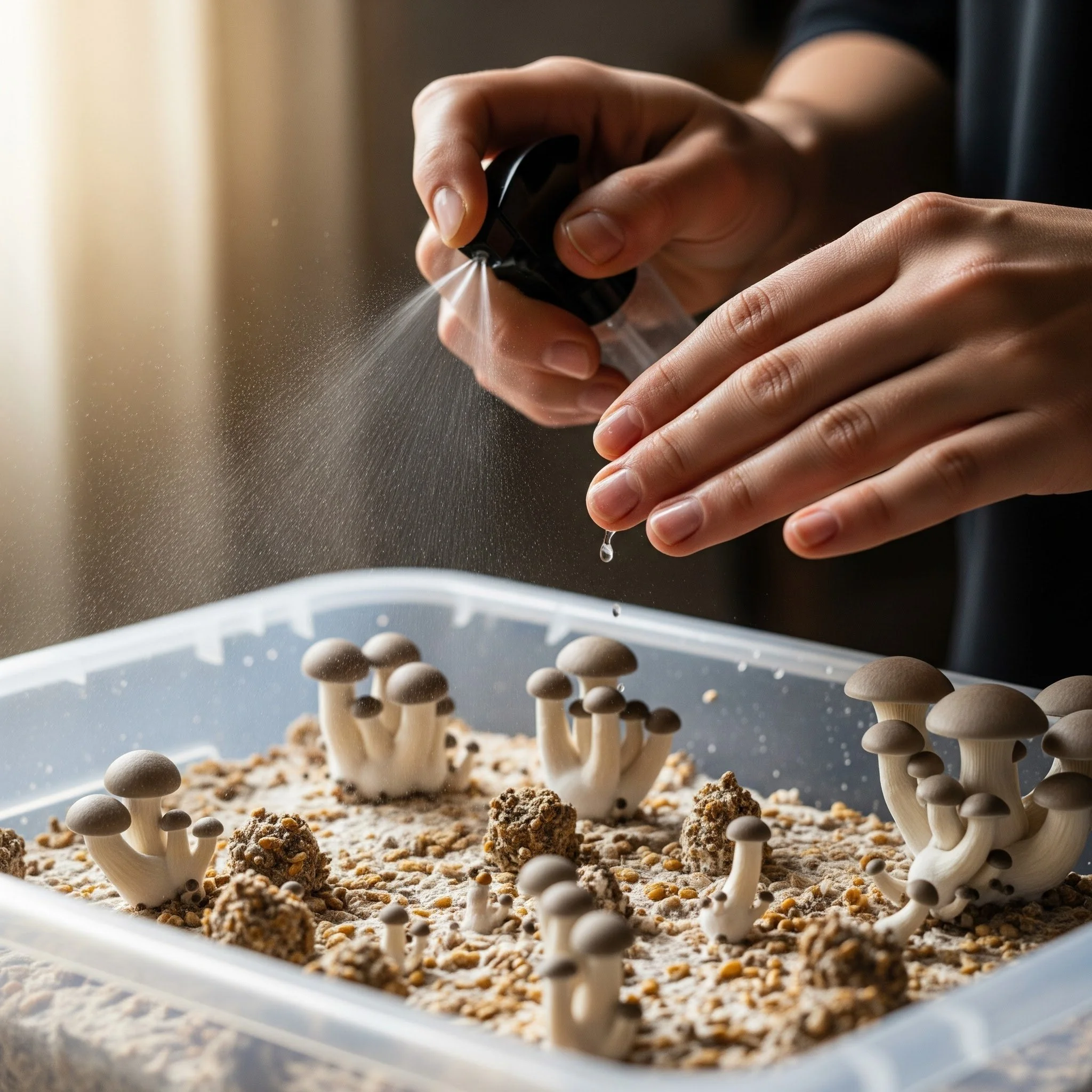
At Mycology Kyngdom, mushroom cultivation is understood as more than a technical skill. It is an intentional practice that trains patience, observation, and consistency—qualities that counter the fragmentation caused by chronic stress. Cultivation cannot be rushed. Conditions must be monitored. Outcomes emerge through care rather than force. In this way, cultivation becomes a form of attentional training. Practically, growing mushrooms also supports self-reliance and cost-conscious wellness. Learning a skill that produces tangible results reinforces competence and restores trust in one’s ability to follow a process through to completion.
Integrating Attention, Identity, and Growth
Sustainable transformation does not arise from isolated interventions. It emerges from alignment—between attention, intention, and identity. When attention stabilizes, confidence can grow. When confidence grows, identity strengthens. When identity strengthens, individuals are better equipped to navigate external challenges without losing themselves in the process. Intentional practices—whether reflective, creative, or cultivation-based—restore continuity between inner and outer life.
Cultivate What You Consume

Reclaiming attention is an act of self-respect. Knowing thyself is not a destination—it is a practice. Mushroom cultivation offers more than a harvest. It offers relationship: with patience, presence, and personal responsibility. For those seeking grounded, meaningful, and cost-conscious practices that support both inner and outer growth, cultivation is an invitation worth considering. At its core, Mycology Kyngdom stands for intentional growth—of knowledge, skill, and self. The question is not whether change is possible, but whether attention is being directed toward it.
Frequently Asked Questions
How does chronic stress affect attention and focus?
Chronic stress consumes cognitive resources by prioritizing survival responses over executive functions like focus and planning. Over time, this can shorten attention span and disrupt routine-building.
What is the connection between attention and self-confidence?
Attention supports identity formation. When attention is fragmented, self-trust weakens. Sustained, intentional attention reinforces competence, learning, and confidence.
Is microdosing a proven solution for focus or mental health?
No. Microdosing is an area of ongoing research and personal exploration. It is not an established medical treatment and should not be viewed as a universal solution.
How does mushroom cultivation support mindfulness and growth?
Cultivation encourages patience, observation, and consistency. These qualities support attentional discipline and reinforce intentional living.
Why is self-knowledge important for long-term change?
Self-knowledge enables individuals to understand internal patterns and direct attention intentionally, supporting resilience and sustainable personal growth.
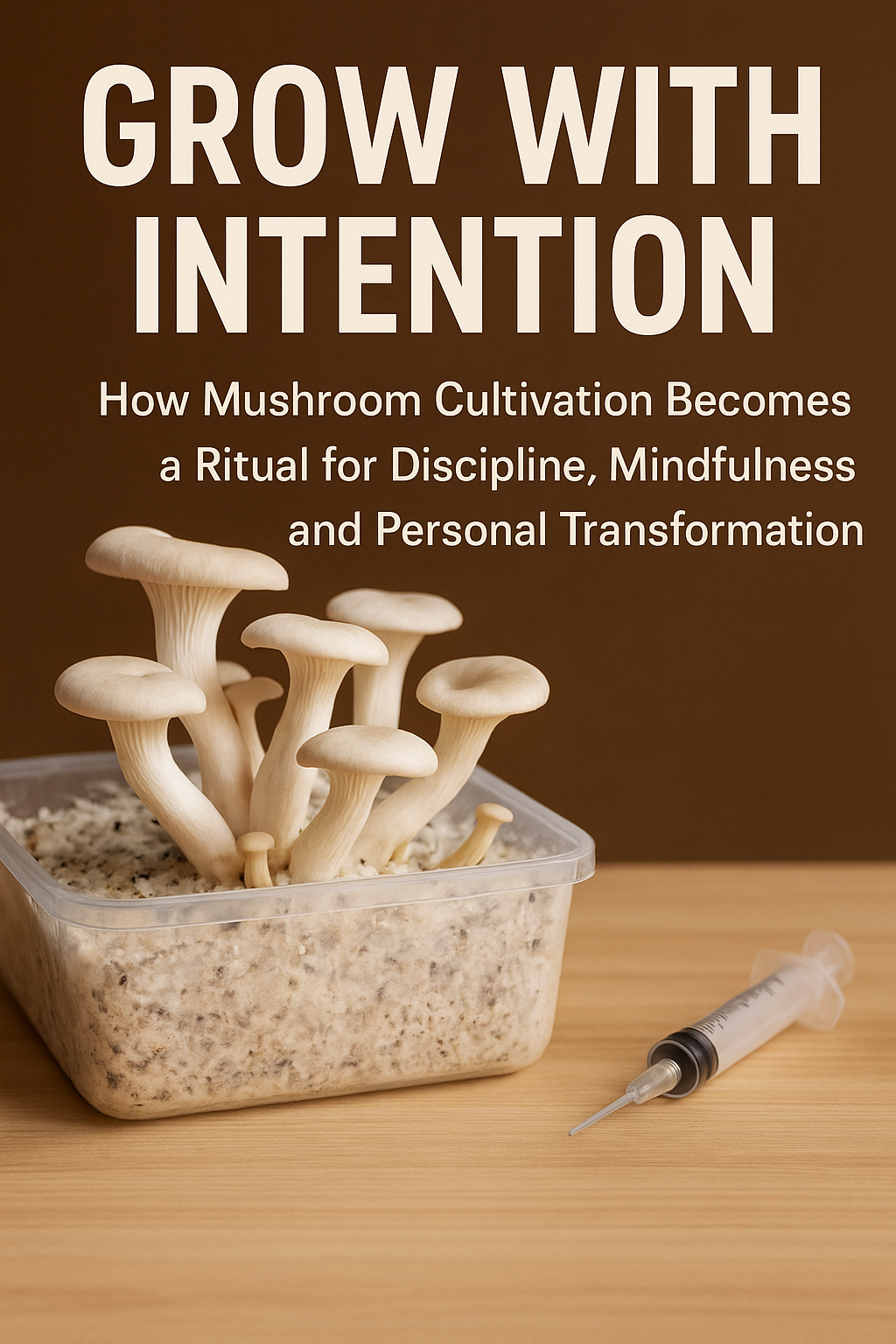
Grow With Intention: How Mushroom Cultivation Can Become a Ritual for Discipline, Mindfulness, and Personal Transformation
Growing mushrooms isn’t just a home project — it’s a powerful ritual of discipline, mindfulness, and intentional living. Discover how cultivating your own mushrooms with liquid culture syringes can help you build structure, stay focused on your goals, and transform daily habits into meaningful growth, inside and out.
🌱 Grow With Intention: How Mushroom Cultivation Can Become a Ritual for Discipline, Mindfulness, and Personal Transformation
There’s a simple truth the mycology world has taught me over 25 years:
Growth isn’t an accident — it’s a ritual.
Whether you’re cultivating mushrooms or cultivating a new version of yourself, every breakthrough begins with a series of small, intentional actions repeated consistently over time.
And this is exactly why growing your own *legal* gourmet and medicinal mushrooms with liquid culture syringes is more than a hobby — it’s a practice of discipline, presence, manifestation, and measurable personal success.
---
🍄 Rituals Build Discipline — and Discipline Builds Results
Humans thrive on intentional structure. When you transform everyday actions into rituals, those rituals shape your identity and your outcomes.
Think about something simple:
Every morning you:
1. Write your affirmations (the 3-6-9 technique, for example).
2. Brush your teeth.
3. Oil rinse.
Individually, they’re tasks.
But together — repeated daily — they become a ritual that supports your health, your confidence, your manifestation ability, and your mindset.
Now imagine applying that same intentional ritual to growing mushrooms.
---
🌾 Mushroom Cultivation Is One of the Most Powerful Discipline Rituals You Can Adopt
When you grow mushrooms — lion’s mane, oyster, reishi, cordyceps — you’re doing more than growing food or supplements.
You are practicing:
✔ Patience
Mycelium doesn’t rush. It grows with quiet consistency.
You learn to mirror that energy.
✔ Precision
Sterilizing, inoculating, misting, monitoring airflow — you create habits that strengthen your attention to detail.
✔ **Consistency
Tending your grow daily reinforces the mindset:
> “I show up for what I want.”
✔ Mindfulness
Watching life unfold in real time reconnects you to nature, biology, and your own inner growth.
✔ Confidence
Every flush is a win you created with your own hands.
This is why mushroom cultivation pairs beautifully with manifestation work, affirmations, journaling, and intention-setting.
It’s ritual meets science.
Discipline meets intuition.
Growth meets growth.
🔬 Why Start With Liquid Culture Syringes?
At Mycology Kyngdom LLC, we believe success begins with the right foundation.
Liquid culture syringes give you:
✔ Fast colonization
✔ Higher success rates
✔ Robust, healthy mycelium
✔ A head start compared to spores
✔ Perfect compatibility with grow bags and monotubs
Whether you’re a first-time grower or leveling up, LC syringes make the process smoother, faster, and more reliable.
Paired with intentional daily rituals, they make transformation practical and tangible.
🌿 A Growing Ritual That Reinforces Every Goal You Set
When you incorporate mushroom cultivation into your daily routine, you create a discipline loop:
Intent → Action → Growth → Reward → Identity Shift
Your mushrooms grow — so your confidence grows.
Your confidence grows — so your discipline grows.
Your discipline grows — so your goals grow more achievable.
It’s the same principle behind:
journaling
affirmations
meditation
breathwork
fitness
habit stacking
Except here, you literally watch your discipline turn into food, wellness, or medicine.
---
🛒 Ready to Begin Your Growth Ritual? Start Today.
Every major change in your life begins with a single, intentional action.
Today, that action can be choosing your first (or next) liquid culture syringe.
👉 Start your mushroom cultivation journey now with Mycology Kyngdom LLC.
Grow intentionally. Grow consistently. Grow powerfully.

The Psilocybin Therapy Biohacking Phenomenon: How a Mushroom Is Rewriting the Blueprint of Human Optimization
Life transitions—whether anticipated or sudden—represent critical periods of psychological, emotional, and behavioral adjustment. While these phases often introduce uncertainty, they also provide unique opportunities for growth, self-reflection, and recalibration. This article examines the underlying frameworks that shape how individuals navigate change, highlighting evidence-based strategies that support resilience, adaptive decision-making, and long-term personal development.
The Psilocybin Therapy Biohacking Phenomenon: How a Mushroom Is Rewriting the Blueprint of Human Optimization
For years, “biohacking” meant wearable tech, blue-light glasses, cold plunges, and nootropics that promised sharper focus and cleaner energy. But a new wave is rising—one that’s less about micro-adjustments and more about deep inner rewiring.
At the center of this movement is something ancient, natural, and surprisingly elegant:
Psilocybin therapy.
Not as a recreational experience.
Not as a trend.
But as a guided, clinically informed biohack that targets the root of the mind itself.
Welcome to the next evolution of human optimization.
Why Psilocybin Therapy Is the Biohack People Are Talking About
Traditional biohacking focuses on upgrading the body:
Better sleep. Better energy. Better productivity.
Psilocybin therapy focuses on upgrading the operating system.
Think of it like this:
Most hacks optimize performance on the surface.
Psilocybin therapy explores optimization at the source.
When used legally in supervised therapeutic settings, psilocybin appears to create a temporary state of heightened neural flexibility—a brief but powerful window where deeply ingrained mental loops soften and the brain becomes more adaptable.
Biohackers call it “the reset effect.”
Researchers call it “neuroplasticity enhancement.”
Users often call it “the most impactful inner shift of my life.”
The Science Behind the Hype (Without the Jargon)
In a guided therapeutic session, psilocybin interacts with serotonin systems and temporarily disrupts rigid brain patterns—especially those tied to depression, anxiety, and trauma.
This creates what researchers often describe as:
🧠 A neural ‘reboot’ window
During this window, new perspectives can form. Old narratives loosen. Emotional insights surface with clarity and meaning.
✨ A boost in psychological flexibility
This is the real biohack:
The ability to think, feel, and interpret reality in more adaptive, healthier ways.
🌿 A shift from survival mode to connection mode
Many describe a profound sense of connectedness—to self, to others, to purpose.
And unlike daily supplements or cognitive boosters, psilocybin therapy is not something people take every day. It’s a structured, supervised experience designed for long-term benefit.
That’s what separates it from gimmicks.
Why Biohackers Are Obsessed: The Holistic Advantage
Biohacking culture loves efficiency—and psilocybin therapy delivers something unmatched:
1. It targets root problems, not surface symptoms
Instead of optimizing around stress, anxiety, or burnout, psilocybin therapy (in legal, guided settings) aims to address the mental patterns behind them.
2. It blends ancient practice with modern rigor
You get:
ceremonial intention
neuroscience-driven frameworks
guided integration
personalization
This hybrid is irresistible to the new wave of wellness innovators.
3. It offers transformation, not maintenance
Most enhancements require constant upkeep.
This is different.
Its power lies in depth, not frequency.
4. It taps into the #HealingEra movement
The internet is pivoting away from “hustle culture” and into conscious living, nervous system literacy, and mental sovereignty. Psilocybin therapy sits right at that intersection.
A Cultural Shift: From Optimization to Internal Evolution
This is the part most people underestimate:
We’re not witnessing another wellness trend.
We’re witnessing a cultural reorientation.
People aren’t chasing “peak performance” the same way they did five years ago.
They’re chasing:
emotional clarity
creative expansion
spiritual alignment
identity authenticity
mental resilience
inner peace
And psilocybin therapy—under safe, supervised, legal conditions—speaks directly to that desire.
Biohacking used to be mechanical.
Now it’s becoming meaningful.
The Movement Is Growing Fast
Legal access in certain regions, clinical trials at major universities, and large-scale cultural conversations have accelerated interest.
And here’s the crucial part:
This isn’t about shortcuts. It’s about breakthroughs.
The new generation of biohackers isn’t trying to escape life—
they’re trying to engage with it more deeply.
Psilocybin therapy embodies that shift.
The Future: Integrated, Ethical, Conscious Enhancement
The psilocybin therapy biohacking phenomenon signals where mental wellness is going:
More internal work
More emotional intelligence
More guided experiences, not solo experiments
More emphasis on meaning, not just metrics
More regulated pathways, less underground risk
The future of biohacking is less about hacking the body
and more about understanding the mind.
The Real Takeaway
This movement isn’t powered by hype—
it’s powered by a generation that’s done being disconnected, overstimulated, and emotionally exhausted.
People want depth.
They want clarity.
They want healing that feels intentional, not transactional.
And psilocybin therapy, when delivered safely and professionally, offers a rare combination:
Scientific promise + emotional transformation + ancient wisdom + modern structure.
That’s why it’s becoming the centerpiece of the next era of conscious biohacking.

Why Professionals Are Turning to Microdosing to Beat Burnout and Find Balance
In a world where burnout has become the norm, professionals are seeking new ways to stay balanced, creative, and fulfilled. One surprising solution is gaining traction: microdosing psilocybin mushrooms. Rather than escaping reality, microdosers are learning to engage with it more mindfully—boosting focus, creativity, and calm in the process.
In this article, Mycology Kyngdom LLC explores how microdosing can support emotional well-being, enhance productivity, and restore harmony between work and life. With practical strategies, scientific insights, and tools for cultivating your own mushrooms safely at home, this is your guide to growing balance from the ground up.
Grow intentionally. Live mindfully. Thrive naturally. 🌿
How mindful mushroom cultivation is helping professionals find focus, creativity, and calm in a world of burnout.
What Does Work-Life Balance Really Mean?
Work-life balance isn’t just about clocking fewer hours—it’s about creating harmony between professional demands and personal fulfillment. It means having enough energy and emotional space to succeed at work without sacrificing mental health, relationships, or self-care. True balance allows you to be fully present in each part of your life: productive and creative during work hours, relaxed and connected in your personal time.
When this balance slips, the results are easy to spot—burnout, irritability, anxiety, and a constant sense of being “on.” A 2023 study from Indeed found that 52% of workers report feeling burned out, up from pre-pandemic levels. Finding healthier rhythms isn’t a luxury anymore; it’s a necessity for long-term well-being and success.
The Rise of Microdosing: A New Approach to Well-Being
Microdosing refers to the practice of consuming very small, sub-perceptual amounts of psilocybin mushrooms—typically about one-tenth of a recreational dose. The goal isn’t to trip, but to subtly enhance mood, focus, and creativity while reducing anxiety and stress.
Unlike caffeine or other stimulants that push productivity at the cost of calm, microdosing is designed to help people work smarter, not harder. According to a 2022 survey by Gwellamushrooms.com:
71% of microdosers reported decreased stress levels, and
86% said microdosing helped improve their professional performance.
Early research from universities such as the University of Toronto and Imperial College London supports these findings, showing that participants who microdose often report improved mood regulation, emotional stability, and focus.
Users often describe feeling more present in meetings, more patient with colleagues, and more capable of shifting gears between tasks and personal life. Instead of running on adrenaline, microdosers aim to operate with steady focus and emotional balance.
How Microdosing Can Support Work-Life Balance
While research is still developing, early studies have found self-reported improvements in mood, focus, and emotional regulation among microdosers. These changes can directly support a balanced lifestyle in several ways:
Enhanced Focus and Productivity – Microdosing may help sustain concentration and creativity without the jittery crash of caffeine or stimulants. Many professionals report entering a “flow” state more easily, making their work more efficient and enjoyable.
Emotional Clarity – By promoting mindfulness and self-awareness, microdosing may reduce overreaction to stress, allowing smoother transitions between professional challenges and personal moments.
Reduced Anxiety and Burnout – Consistent low-dose use has been associated with lower anxiety and improved mood, making it easier to manage workloads while staying calm and grounded.
Better Boundaries – The increased self-awareness that comes with microdosing can encourage clearer boundaries—knowing when to log off, rest, and recharge.
For instance, one software developer shared that microdosing “helped me stop overworking and start noticing when I needed to rest,” showing how subtle shifts in awareness can lead to major lifestyle improvements.
In short, microdosing isn’t about escaping work—it’s about engaging with it more mindfully while protecting your personal energy.
Practical Strategies to Cultivate Balance (With or Without Microdosing)
Even with tools like microdosing, achieving lasting work-life balance requires daily habits that nurture both mind and body. Here are a few proven strategies:
🌅 Establish a Morning Mindset Routine
Start your day intentionally—through meditation, journaling, or light exercise. Many microdosers pair their small dose with mindfulness practices to anchor their energy and intentions for the day.
⏱️ Work in Focused Intervals
Try techniques like the Pomodoro Method (25-minute work sessions with short breaks) to stay mentally fresh. Microdosing often complements these structured bursts of focus, enhancing flow states and creative thinking.
🏠 Protect Personal Time Like an Appointment
Set boundaries by scheduling rest and family time as firmly as meetings. When your off-hours are sacred, your on-hours become more productive and rewarding.
🌿 Create a Space for Growth—Literally
Growing your own mushrooms can be both practical and meditative. Using high-quality grow bags and monotubs, you can cultivate your own supply safely and responsibly at home. The process itself encourages patience, presence, and care—values that align perfectly with achieving inner and outer balance.
🧘 Listen to Your Mind and Body
Microdosing isn’t for everyone, and it’s not a quick fix. Always start small, stay mindful of effects, and consult with a qualified health professional if you have medical or mental health conditions. True balance comes from consistent self-awareness and self-care, not shortcuts.
Conclusion: Finding Balance Starts with Growth
As the modern world continues to blur the boundaries between work and personal life, professionals everywhere are seeking new ways to stay grounded, creative, and fulfilled. Microdosing psilocybin mushrooms is emerging as one such approach—offering a subtle yet powerful shift toward balance, mindfulness, and emotional resilience.
We’ve explored how microdosing may help improve focus, reduce stress, and promote overall well-being, supported by growing research and user reports. More importantly, we’ve seen that achieving true work-life balance isn’t about doing more—it’s about doing what matters better. Combining mindful habits, intentional rest, and natural tools like mushroom cultivation can create a lifestyle rooted in awareness and growth.
At Mycology Kyngdom LLC, we believe that balance begins with what you nurture. Whether you’re exploring the benefits of microdosing or simply discovering the joy of cultivating your own mushrooms, our liquid cultures, grow bags, and monotubs are designed to make that process simple, safe, and rewarding.
Explore our website to discover cultivation guides, community resources, and everything you need to begin your journey toward mindful growth.
So take a step toward your own version of balance—
Grow intentionally. Live mindfully. Thrive naturally.