

Rebuilding Focus from the Inside Out
In today’s fast-paced world, attention is a precious resource—shaped not only by personal habits but by stress, economic instability, and identity challenges. Chronic distraction, low self-esteem, and imposter syndrome often emerge from these pressures, creating cycles that hinder personal growth. Emerging wellness practices, such as mindful routines and exploratory approaches like microdosing, offer potential ways to enhance focus and self-awareness—always within legal and ethical boundaries. At the heart of transformation lies the ancient principle of know thyself: cultivating self-knowledge allows individuals to direct attention intentionally, strengthen confidence, and reclaim agency over their lives. Mushroom cultivation exemplifies this process, offering a practice that combines patience, observation, and consistency, reinforcing both attentional discipline and personal empowerment. By integrating intentional practices into daily life, readers can cultivate resilience, self-trust, and a deeper connection to themselves and the world around them—laying the foundation for meaningful, sustainable growth.
Rebuilding Focus from the Inside Out: Self-Knowledge, Resilience, and Intentional Growth
Attention as a Measure of Agency
In modern culture, shortened attention spans are often framed as personal shortcomings—failures of discipline, motivation, or willpower. Yet across psychology, sociology, and neuroscience, attention is increasingly understood as a contextual resource rather than a purely individual trait. It is shaped by stress, environment, economic pressure, and one’s internal sense of identity and agency. For individuals navigating poverty, housing insecurity, addiction, or chronic instability, attention is not simply distracted—it is continuously taxed. Over time, this erosion intersects with low self-esteem, diminished self-confidence, and persistent imposter syndrome. The result is not just difficulty focusing, but difficulty trusting oneself.
This article explores how these forces interconnect, why the ancient principle of knowing thyself remains essential to sustainable change, and how intentional practices—particularly mushroom cultivation—can support focus, confidence, and self-directed growth.
The Cognitive Cost of Scarcity and Chronic Stress

Mindful reflections facilitated by mushroom cultivation.
Attention Under Pressure
Attention is a finite cognitive resource. Executive functions—focus, impulse control, planning—require stability to operate effectively. When individuals experience chronic stress, the nervous system prioritizes survival over reflection. Economic insecurity, poverty, and homelessness generate persistent uncertainty. Research on scarcity shows that when mental bandwidth is consumed by immediate needs, cognitive capacity narrows. This is not a failure of character; it is an adaptive response to threat.
Reinforcing Cycles
Reduced attention makes it harder to maintain routines, acquire new skills, or follow through on long-term goals. These difficulties can then reinforce internal narratives of inadequacy, further taxing attention and confidence. Over time, attention, identity, and circumstance form a self-reinforcing loop.
Addiction, Coping, and the Search for Relief

Neurobiology and Behavior
Addiction and compulsive behaviors often emerge in environments marked by instability and psychological strain. Chronic stress alters dopamine regulation—the brain’s reward and motivation system—making immediate relief more compelling than delayed benefit.
This helps explain why individuals facing sustained hardship may gravitate toward short-term coping strategies, even when those strategies undermine long-term well-being.
Beyond Moral Narratives
Framing addiction as a moral failure ignores its structural and neurological context. Without addressing stress, identity fragmentation, and attentional depletion, efforts to restore focus or motivation remain incomplete.
Self-Esteem, Self-Confidence, and Imposter Syndrome
Low self-esteem and imposter syndrome often develop when individuals internalize external instability. Repeated disruption makes it difficult to form a coherent sense of competence or authorship over one’s life. Imposter syndrome reflects a disconnect between action and identity. Even when progress occurs, individuals may feel undeserving or temporary—especially when internal validation has been eroded by years of uncertainty. Attention plays a critical role here. Where attention is fragmented, identity fragments with it. Where attention is sustained, integration becomes possible. Where attention goes, energy flows.

Microdosing: An Emerging Area of Exploration (Educational Context)
In recent years, microdosing has entered broader cultural discussion as an area of wellness and self-exploration. Individuals report exploring it for perceived effects related to focus, emotional insight, creativity, and awareness. It is important to emphasize that research in this area is still developing. Microdosing is not an established medical treatment, nor a universal solution. Laws vary by jurisdiction, and evidence continues to evolve. Within responsible frameworks, microdosing is often discussed not as a fix, but as something some individuals explore alongside intentional practices such as reflection, journaling, and structured routines. In this context, intention—not substance—remains central.

The Foundation of Sustainable Change
The directive know thyself is not abstract philosophy—it is practical discipline. Self-knowledge allows individuals to recognize patterns, regulate attention, and respond rather than react. Without self-knowledge, attention is easily hijacked by external pressure or internal doubt. With it, attention becomes an instrument of agency. To know oneself is to reclaim authorship over attention: where it goes, why it goes there, and whether it aligns with one’s values. Over time, this practice strengthens confidence, coherence, and resilience.
Mushroom Cultivation as Intentional Practice
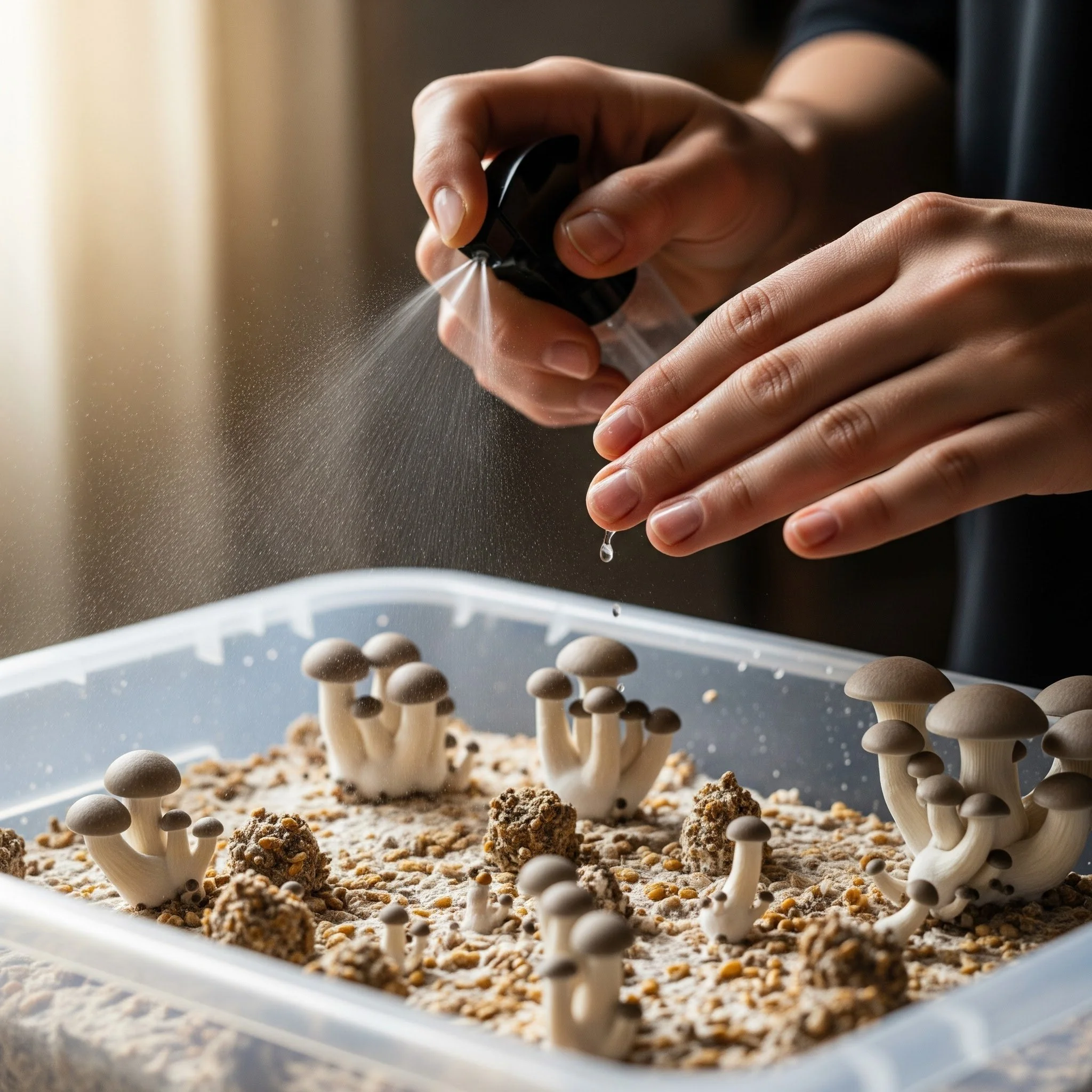
At Mycology Kyngdom, mushroom cultivation is understood as more than a technical skill. It is an intentional practice that trains patience, observation, and consistency—qualities that counter the fragmentation caused by chronic stress. Cultivation cannot be rushed. Conditions must be monitored. Outcomes emerge through care rather than force. In this way, cultivation becomes a form of attentional training. Practically, growing mushrooms also supports self-reliance and cost-conscious wellness. Learning a skill that produces tangible results reinforces competence and restores trust in one’s ability to follow a process through to completion.
Integrating Attention, Identity, and Growth
Sustainable transformation does not arise from isolated interventions. It emerges from alignment—between attention, intention, and identity. When attention stabilizes, confidence can grow. When confidence grows, identity strengthens. When identity strengthens, individuals are better equipped to navigate external challenges without losing themselves in the process. Intentional practices—whether reflective, creative, or cultivation-based—restore continuity between inner and outer life.
Cultivate What You Consume

Reclaiming attention is an act of self-respect. Knowing thyself is not a destination—it is a practice. Mushroom cultivation offers more than a harvest. It offers relationship: with patience, presence, and personal responsibility. For those seeking grounded, meaningful, and cost-conscious practices that support both inner and outer growth, cultivation is an invitation worth considering. At its core, Mycology Kyngdom stands for intentional growth—of knowledge, skill, and self. The question is not whether change is possible, but whether attention is being directed toward it.
Frequently Asked Questions
How does chronic stress affect attention and focus?
Chronic stress consumes cognitive resources by prioritizing survival responses over executive functions like focus and planning. Over time, this can shorten attention span and disrupt routine-building.
What is the connection between attention and self-confidence?
Attention supports identity formation. When attention is fragmented, self-trust weakens. Sustained, intentional attention reinforces competence, learning, and confidence.
Is microdosing a proven solution for focus or mental health?
No. Microdosing is an area of ongoing research and personal exploration. It is not an established medical treatment and should not be viewed as a universal solution.
How does mushroom cultivation support mindfulness and growth?
Cultivation encourages patience, observation, and consistency. These qualities support attentional discipline and reinforce intentional living.
Why is self-knowledge important for long-term change?
Self-knowledge enables individuals to understand internal patterns and direct attention intentionally, supporting resilience and sustainable personal growth.